
Do you check vehicles in person?
Yes, we check every vehicle in person. Our team in Japan are experts at knowing exactly what to look at on the cars to ensure they’ll meet compliance standards in New Zealand.
How does the bidding process work?
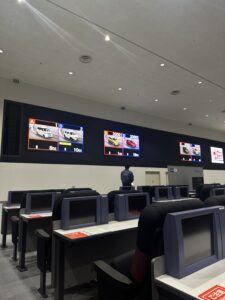
In Japanese auctions, the bidding window lasts only 10-40 seconds, leaving no time for discussion; thus, our clients must set a maximum budget for their chosen vehicle and hope to secure the vehicle below the max bid amount. Auctions feature multiple “lanes” where cars are put up for auction approximately every 20 to 30 seconds throughout an extensive 8 to 12-hour period; furthermore, a significant number of bidders participate remotely, not physically present at the auction site.
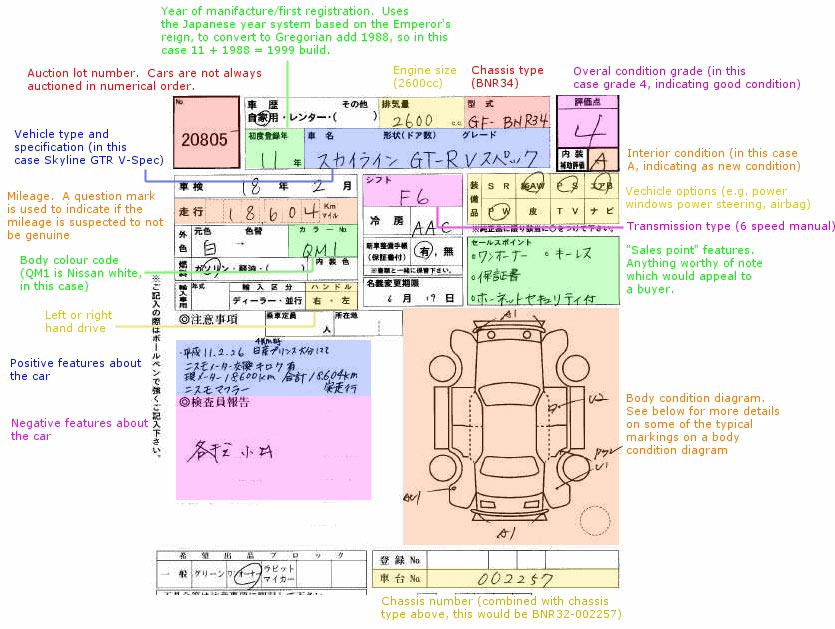
How do I read the auction sheets?
Global Auto Imports has a minimum standard of 3.5 grading for the vehicles they purchase unless the client is willing to purchase a lower grade.
Exterior Condition
5 – a car that looks brand new and has no blemishes.
4.5 – excellent condition and could pass for a new one, with only minor imperfections that only the most meticulous buyer would notice.
4 – indicates a vehicle with better-than-average wear and tear, in clean overall condition despite a few minor marks.
3.5 – cars with normal wear and tear based on their age and mileage, and may need some cosmetic work such as paint touch-ups or minor repairs to interior parts.
3 – Vehicle is in very poor overall condition. Expect paint fade, smokers smell, scratching, rust, chassis cutting and more.
R – Repaired vehicles: Most sports cars produced before 2000, such as Skylines, Silvias, RX7s, Chasers, etc., are repaired vehicles in Japan. Repairs can range from minor alterations like cutting the radiator support for a front-mount intercooler to significant front-end damage. These vehicles will always be cheaper and sometimes worth considering if the damage is not significant.
RA – Repaired vehicles that are still in good overall cosmetic condition.
RA2/3 – Repaired vehicles in poor condition, these vehicles will be extremely bad all around and may have serious repair work done to a poor standard.
Interior Condition
A – represents a brand new car with no signs of wear or tear.
B – is very clean and has better-than-average wear and tear.
C – signifies a car with typical wear and tear based on its age and mileage, which may include some marks or tears on the seats. However, significant issues are usually mentioned separately in the auction notes.
D – denotes a car that is very rough or has been stripped as part of a weight loss program for racing.
E – indicates an interior that is in extremely poor condition. Dash cracks, smokers smell, sticky or melting plastics.
What is your refund policy?
A deposit of $1190 NZD is required to secure the services of XXX. The balance of our fee is payable upon securing the vehicle and you paying the seller for said vehicle. The total fee is based upon the final price of the vehicle and the country we are importing it from. Our fee is non-refundable.